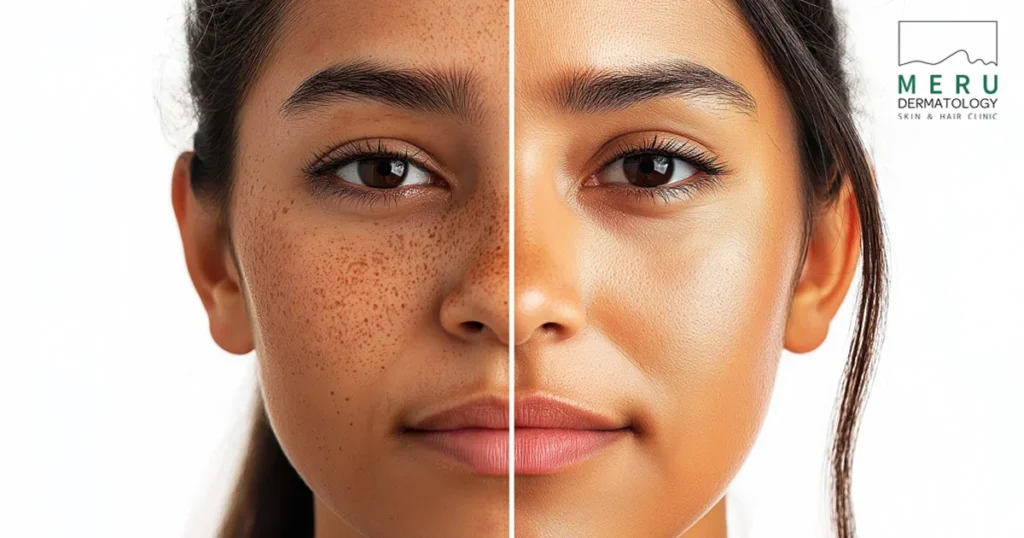
Not all darkening of the skin is the same. Though both melasma and tanning appear as pigmentation, they differ in cause, depth and the way they should be treated. Misunderstanding this difference can lead to delayed results or worsen the condition.
Meru Dermatology Clinic accurately diagnoses and under the care of Dr. Divya K, treatment plans are customised based on the exact type of pigmentation.
What Is Tanning?
Tanning is the skin’s natural response to sun exposure. When exposed to UV rays, the skin produces more melanin as a protective mechanism, which leads to a darker appearance.
Key features of tanning:
→ Even or diffuse darkening
→ Appears after sun exposure
→ Affects exposed areas (face, arms, neck)
→ Gradually fades with proper sun protection and skincare
Tanning is typically superficial and reversible with the right care.
What Is Melasma?
Melasma is a more complex form of pigmentation influenced by hormones, genetics and sun exposure. It appears as patchy, uneven brown or greyish areas on the cheeks, forehead, upper lip and jawline.
Key features of melasma:
→ Irregular, patchy pigmentation
→ Often symmetrical on the face
→ Triggered by sunlight, heat, and hormonal changes
→ Tends to be chronic and recurrent
Melasma happens in the deeper layers of skin. This makes it more challenging to treat than tanning.
Why the Difference Matters
Treating melasma like simple tanning can actually worsen pigmentation. Harsh creams, over-exfoliation or incorrect treatments may irritate the skin and trigger more pigment production.
That’s why dermatologist-guided care is essential, especially for Indian skin types, which are more prone to pigmentation issues.
How Dermatologists Treat Each Condition
Treatment is always cause-based at Meru Dermatology Clinic:
Tanning is approached through:
→ Broad-spectrum sunscreen and reapplication
→ Antioxidant skincare
→ Gentle exfoliation or mild procedures for faster recovery
Melasma is addressed by:
→ Medical-grade topical treatments
→ Strict and consistent sun protection
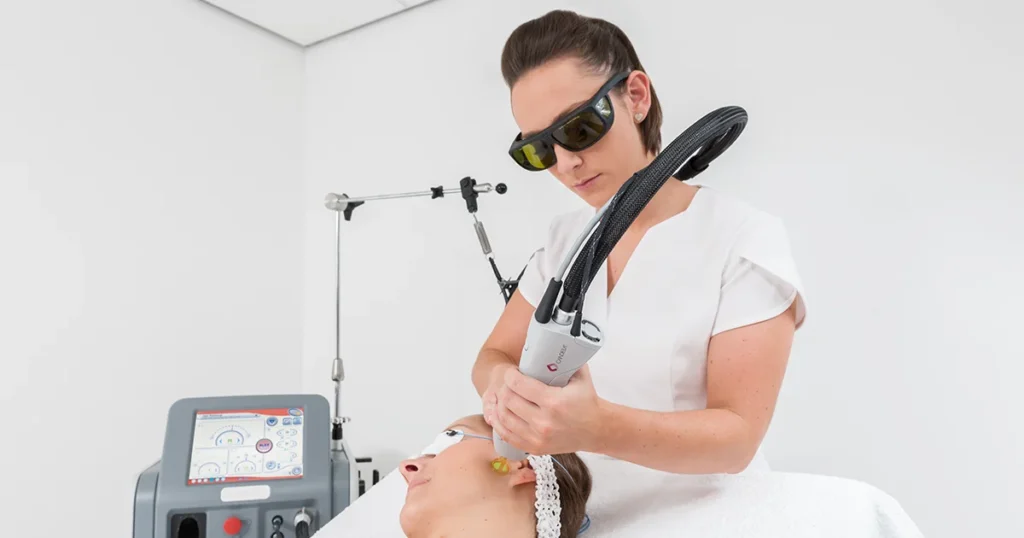
→ Advanced procedures like chemical peels or laser toning
→ Long-term maintenance plans to prevent recurrence
The Role of Sun Protection
Both conditions are primarily influenced by sunlight. Without proper sunscreen use, even the best treatments may fail. Daily use of a broad-spectrum sunscreen, along with protective habits like avoiding peak sun hours, is essential for maintaining results.
A Long-Term, Thoughtful Approach
Although tanning can improve relatively quickly, melasma requires patience, consistency and expert guidance. Quick fixes often lead to setbacks. We, at Meru Dermatology Clinic, focus on safe, gradual improvement with long-term skin stability instead of temporary solutions.
FAQs
1. Can melasma go away completely?
A: Melasma can be controlled effectively, but it may recur. Maintenance is essential.
2. How do I know if it’s tanning or melasma?
A: A dermatologist can assess the pattern, depth, and triggers to diagnose accurately.
3. Can tanning turn into melasma?
A: No, but sun exposure can trigger or worsen melasma.
4. Are laser treatments safe for melasma?
A: Yes, when done carefully under dermatological supervision.
5. Is sunscreen necessary even indoors?
A: Yes, especially if there is exposure to sunlight through doors or windows.