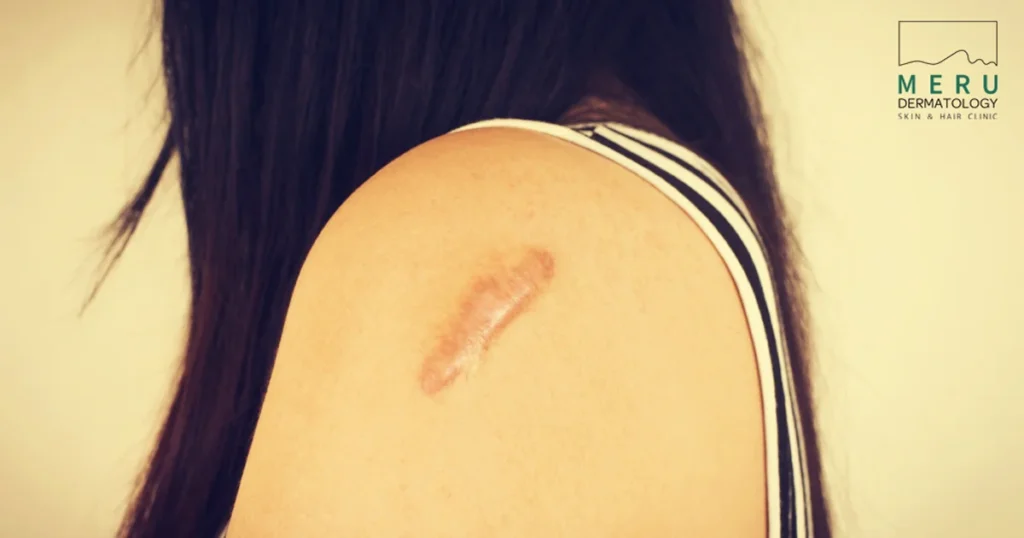
Keloids are thick, raised scars that grow beyond the boundaries of the original wound. They can develop after acne, cuts, burns, piercings, surgical procedures, or even minor skin injuries. For many patients, keloids are not just a cosmetic concern, they can also cause itching, discomfort, and emotional distress.
At the doctor-owned and operated Meru Dermatology Clinic in Madhapur / Jubilee Hills, Dr. Divya K focuses on evidence-based keloid management that focuses on both the scar’s appearance and the underlying causes that form excessive scar tissue.
What Causes Keloids?
Keloids form when the skin produces excess collagen during the healing process. Instead of stopping once the wound closes, collagen production continues, which leads to a raised, firm scar. Some individuals have a genetic tendency to develop keloids, especially those with darker skin tones.
Common areas where keloids appear include the chest, shoulders, jawline, back, and ear lobes.
Why Early Treatment Matters
Keloids often grow slowly over time. Early evaluation by a dermatologist can prevent the scar from enlarging and reduce symptoms like itching or tenderness. Treating keloids early also improves the chances of achieving a flatter, less noticeable scar.
Effective Keloid Treatment Options
Treatment plans at Meru Dermatology Clinic,are personalised after carefully assessing the size, location, and behaviour of the scar. Depending on the case, treatments include:
→ Corticosteroid Injections
One of the most effective treatments for reducing inflammation and flattening raised scars. Regular sessions gradually soften the keloid and reduce thickness.
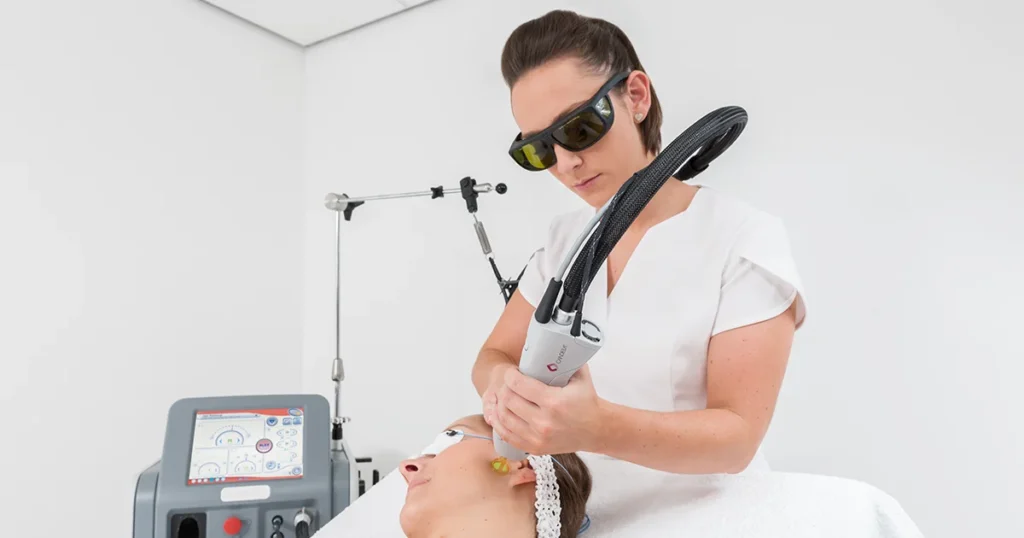
→ Laser Therapy
Advanced dermatological lasers can help reduce redness, improve scar texture, and enhance the overall appearance of the affected skin.
→ Combination Therapy
In many cases, the best outcomes are achieved by combining injections, laser treatments, and medical therapies. This multi-modal approach helps control the scar and reduce the risk of recurrence.
→ Careful Surgical Removal
For large or resistant keloids, surgical removal may be considered. However, surgery is usually combined with other therapies to prevent regrowth.
Patience and Consistency Are Key
Keloid treatment is rarely a one-session solution. As these scars have a tendency to come back, dermatologists focus on long-term control rather than quick fixes. Most patients experience significant improvement in both appearance and symptoms with consistent treatment and monitoring,
Dermatologist-Led Care Makes a Difference
Keloids are complex scars that require medical expertise and careful planning. At Meru Dermatology Clinic, Dr. Divya K evaluates each case individually and designs a treatment plan that balances safety, effectiveness and long-term scar control.
If you notice a raised scar that continues to grow, early consultation can help prevent further progression and improve treatment outcomes.
FAQs
1. What is the difference between a keloid and a normal scar?
A: A normal scar stays within the wound boundary, while a keloid grows beyond the original injury and becomes raised and firm.
2. Can keloids disappear on their own?
A: Keloids rarely go away without treatment. Professional dermatological care is usually required to control their growth.
3. Are keloid treatments painful?
Most treatments, such as injections or laser therapy, are performed with measures to keep patients comfortable.
4. Can ear piercing cause keloids?
Yes. Ear lobe piercings are one of the most common causes of keloids, especially in people who are genetically prone to them.
5. Can keloids come back after treatment?
Keloids can recur, which is why dermatologists often use combination treatments and follow-up care to reduce the risk.